Global specialist in large organisational transformations.
Empowering leaders to reshape organizations, strengthen performance, and deliver lasting results across international markets.
We help multinational organizations navigate complex change — from restructuring business units and revitalizing markets to building agile, future-ready operating models. With proven experience across the Americas, Europe, and Asia, we bring strategic clarity, cross-cultural insight, and hands-on execution to every engagement.
Our Formula for Success
Success isn't evenly weighted. In every transformation we've led, one factor consistently outweighs the other two combined — and knowing which one changes how you plan, hire, and execute.
Timing
Diagnosing market timing and moving at the speed it demands.
Leadership
The right leaders in the right roles, at every level of the organization.
Skills
Every employee able to execute their role, aligned to the larger strategy.
Diagnose before you commit
Corporate history is littered with well-built ideas that arrived at the wrong moment — Kodak, Blockbuster, Nokia, BlackBerry. Diagnosing the market's real timing, and moving at the speed it demands, is the difference between a company that adapts and one that gets disrupted by its own invention.
The right team, in the right seats
The best quarterback still needs a strong offensive line. Putting the right leaders in the right roles can transform a market in months, not years — and the results tend to endure well beyond the transformation itself.
Clarity at every level
Every employee needs to execute their role and understand how it connects to the larger strategy. High-performing teams are built on transparency and clear translation of strategy to every level — not a slide deck.
Timing in Action
Six moments where recognizing the right time to act would have made all the difference
Kodak invented the digital camera in 1975 — and shelved it, because digitizing meant destroying its own 70%-margin film business. Two decades of accurate, rational data convinced Kodak's leadership to keep protecting the business that was about to disappear. It filed Chapter 11 in January 2012.
In 2000, Blockbuster was offered Netflix for $50M and passed — its $800M-a-year late-fee model looked far too healthy to feel threatened. By the time streaming went mainstream, Blockbuster had neither the capital nor the culture to catch up. It filed for bankruptcy in September 2010.
Nokia's internal metrics in 2007 correctly showed smartphones as a niche luxury product — and were catastrophically wrong within three years. The company had the hardware scale to win, but no culture built for software ecosystems or app platforms. Its handset business sold to Microsoft in 2014 for a fraction of its former value.
BlackBerry built the gold standard in enterprise security, with IT directors as the sole buyer for years. When smartphone buying power shifted to individual employees, that same fortress became a walled garden. Market share fell from 20% in 2009 to under 1% by 2016.
Xerox PARC invented the GUI, the mouse, Ethernet, and the laser printer in the 1970s — arguably the most consequential research lab in computing history. Commercializing any of it meant cannibalizing a $50,000 leased-copier business, so Apple, Microsoft, and 3Com built the future instead. Xerox survived, but shrank from computing pioneer to document-management footnote.
America's largest retailer in 1972, Sears absorbed the big-box wave of the 1980s–90s, then lost the e-commerce wave to Amazon — despite having invented catalog retail decades earlier. Each rational response depleted the capital needed to survive the next wave. Sears filed Chapter 11 in October 2018.
Case Studies
Explore real-world examples of measurable business impact.
Merger of five independent companies into one
Merger of five independent companies into one
A multinational merged five affiliate companies to save US $10 M in operating costs, appointing Gonzalez to build a new HRIS and select the top five leaders from 25 executives.
He applied a Prisoner's Dilemma–based assessment to gather honest peer insights and objectively rank leadership candidates.
Pharmaceutical company fell from first to fifth, then reclaimed the top spot.
Pharmaceutical company fell from first to fifth, then reclaimed the top spot.
Gonzalez was sent to the Philippines to dismantle a corrupt, union-hostile system, de-certifying the country's first management union and ousting its leadership.
He exposed inflated sales practices and overhauled sales, commissions, and manufacturing—cutting distribution costs by over 75% and eliminating overtime.
Discovery of Lipitor the Biggest Blockbuster Drug in the Pharmaceutical Industry
Discovery of Lipitor the Biggest Blockbuster Drug in the Pharmaceutical Industry
Gonzalez took charge of 83 R&D staff during a major strategic shift, increasing the pharma R&D budget from US $283M to $1B.
He restructured the workforce by approving key new hires and overcoming internal resistance, aligning talent with the company's new innovation strategy.
Developing a Relocation and Severance Package for all Employees in Brazil
Developing a Relocation and Severance Package for all Employees in Brazil
Led the relocation of 35 executives during PepsiCo's Latin America HQ move from Rio to South Florida, while managing local staff layoffs.
Designed comprehensive executive relocation packages and fair severance for local employees, navigating internal resistance and ethical objections.
Taking Pepsi Cola to Leadership in Dominican Republic vs. Coca Cola
Taking Pepsi Cola to Leadership in Dominican Republic vs. Coca Cola
Identified major operational inefficiencies and rejected requests for extra funding, instead optimizing existing labor and production capacity.
Redirected savings into marketing, enabling a successful product launch that overtook Coca-Cola without additional capital.
Acquire Market Leadership in Mexico City 63% vs. Coca Cola
Acquire Market Leadership in Mexico City 63% vs. Coca Cola
Revitalized Pepsi during a 300% currency devaluation through the Pepsi Challenge and exclusive new packaging to reposition the brand.
Reduced costs by localizing talent and restructuring expenses, helping Pepsi reach ~63% market share and surpass Coca-Cola.
Implementation of Franchise University
Implementation of Franchise University
Avoided a risky global price hike by focusing on improving bottler profitability through smarter marketing and volume growth.
Created Franchise University to rapidly train global managers, accelerating market plans and driving eight years of share gains.
Leading the Largest Foreign Investment into Cambridge, MA — US $4.0 Billion
Leading the Largest Foreign Investment into Cambridge, MA — US $4.0 Billion
Took on a complex mandate to relocate Novartis's R&D operations from Europe to the U.S. while navigating tax, political, and regulatory challenges.
Expanded staffing from 400 to 1,400 scientists and scaled investment from $400M to $4B.
Unlocking Shareholder Value: A Case Study of the Liquidity Event That Tripled the Company's Stock Price Upon Deal Announcement
Unlocking Shareholder Value: A Case Study of the Liquidity Event That Tripled the Company's Stock Price Upon Deal Announcement
PanamCo's revenue fell from $4.0B to $1.8B amid currency crises, as Gonzalez joined during a CEO transition and faced a takeover by Coca-Cola FEMSA.
He rebuilt leadership across four struggling markets, created a Board-approved Change in Control plan protecting all employee levels, and personally distributed $35 million on the day the deal closed.
Transforming Microsoft's Talent Engine — From 3,400 to 30,000 Hires Annually
Transforming Microsoft's Talent Engine — From 3,400 to 30,000 Hires Annually
Gonzalez joined Microsoft as GM of HR for a $10B group under Steve Ballmer, inheriting a hiring process that took 12+ months with 121 steps.
He rebuilt the system end-to-end—cut decision points from 121 to 9, helped build Satya Nadella's mobility team, secured the Ray Ozzie acquisition, and scaled global hiring from 3,400 to 30,000 annually.
Saving Cott Corporation — From $0.50 to $10+ Stock Price
Saving Cott Corporation — From $0.50 to $10+ Stock Price
Cott Corporation, a major private-label supplier to Walmart, Tesco, and Costco, neared collapse after the 2008 financial crisis, with its stock falling to $0.50.
Gonzalez led a tough, precise restructuring—saving $600M+, boosting the stock from $0.50 to $10+, and making Cott the top-performing stock that year.
Taking Solera Holdings from $540M to $1 Billion — One Year Ahead of Plan
Taking Solera Holdings from $540M to $1 Billion — One Year Ahead of Plan
Solera Holdings, led by Tony Aquila, had $540M revenue and a plan to reach $1B; Gonzalez joined as CHRO and quickly co-authored the strategy.
He moved HQ from San Diego to Dallas, replaced the CFO without impacting the stock price, built a seven-member Office of the CEO, assumed international COO duties, and helped Solera reach $1B a year early.
Let’s start a conversation
Whether you’re preparing for a major transformation or navigating complex organizational challenges, we help leadership teams cut through complexity and move forward with clarity and confidence.
Our work is grounded in deep operational experience and hands-on execution. We partner closely with leaders to diagnose real issues, design pragmatic solutions, and deliver sustained impact.
- Clarify priorities and decision paths
- Align leadership and execution teams
- Accelerate measurable, sustainable outcomes
Ready to chat?
See how we help leadership teams cut through complexity and move forward with clarity.
T&C apply
Please see our Privacy policy
Impact We Deliver
Measured results from large-scale transformation programs across global markets
$1B+
Operating Cost Savings
Delivered through restructuring and business integration.
30+
Major International Projects
Advising organisations across Latin America, Asia, and the US.
28 Countries
Countries Aligned
Structured leadership facilitation across multinational teams.
100%
Executive Selection Accuracy
Leadership recommendation matched global and regional directions.
What We Do
High-impact advisory across the core pillars of global organizational transformation
Human Capital Model
- The Human Capital Model is a comprehensive framework that enables organizations to strategically manage, develop, and leverage their workforce to sustain Profitable Growth.
- It integrates multiple HC functions, each with distinct roles, yet interconnected to ensure optimal talent utilization and organizational performance.
What makes us thrive?
A disciplined approach to clarity, execution, and sustained impact.

Clarity before action
We cut through complexity to surface what truly matters — clarifying priorities, decisions, and pathways before execution begins.
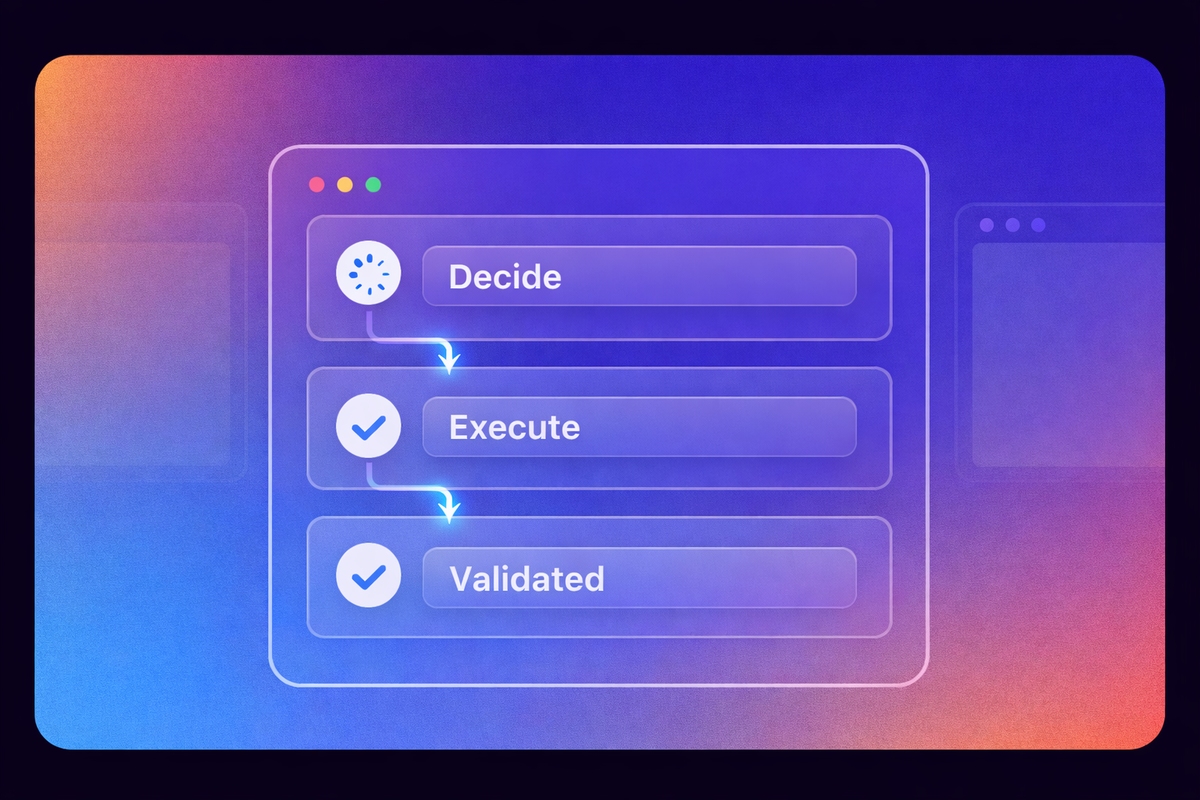
Insight-led execution
We deliver repeatable, disciplined execution — reducing rework, sustaining momentum, and compounding results over time.

Consistency that compounds
We remove noise and over-engineering, simplifying decisions and focusing effort on the few actions that drive disproportionate impact.

Precision, not Complexity
We target the specific constraint that's actually limiting performance, rather than launching broad, complex programs that spread effort thin.
What clients are saying about us?
Real feedback from leaders who have partnered with us on their largest transformation initiatives.

1/3