Mr. Gonzalez joined Novartis in March 2000 after 9+ years at PepsiCo. After a year in the Consumer Health Business, Dr. Dan Vasella asked him to become Head of Human Resources for Research and Development — the epicenter, as Dr. Vasella put it, of Novartis's success. Dr. Vasella even asked Mr. Gonzalez to write his own compensation offer for the role, an option he chose not to take.
Situation
Dr. Vasella had commissioned McKinsey to guarantee Novartis would keep its top spot in drug discovery and development. Their recommendation: move the R&D group to the US, to either the West Coast or the Boston area. This was complicated by the fact that Novartis needed to preserve its Swiss tax status — a 10-percentage-point advantage over its US competitors.
Actors
- Dr. Dan Vasella
- Board of Directors of Novartis A.G.
- Head of Research
- Head of Development
- Head of Pharma
- Head of HR, Novartis
- Head of HR, Pharma
- Every R&D department head who would have to relocate
- President of Harvard
- Mayor of Boston
- President of MIT
- City Manager of Cambridge
- Senator Ted Kennedy
- Senator John Kerry
- Swiss Government
- US IRS
Solution
Mr. Gonzalez had previously moved Novartis Consumer Health from the US to Switzerland, and had built a relationship with the head tax lawyer for Novartis US in New York — so he resolved the tax questions first.
As Head of HR for R&D, he built the staffing plan to hire the 1,400 scientists needed to staff the new Novartis Institute for Biomedical Research. The initial plan called for only 400 scientists, which would have made Novartis a "me too" player in Boston — but the staffing work required was the same whether the number was 400 or 1,400, so the only real change was the size of the investment: from $400M to $4.0 billion.
Once the scale of the project was set, no executive at Novartis wanted to take it on. Mr. Gonzalez recognized it as career-defining, weighed every actor's agenda, and concluded he was the right person for the challenge. He went to Dr. Vasella and volunteered — becoming COO for Research and moving to Cambridge while his family stayed in Switzerland, commuting back and forth to Basel as needed.
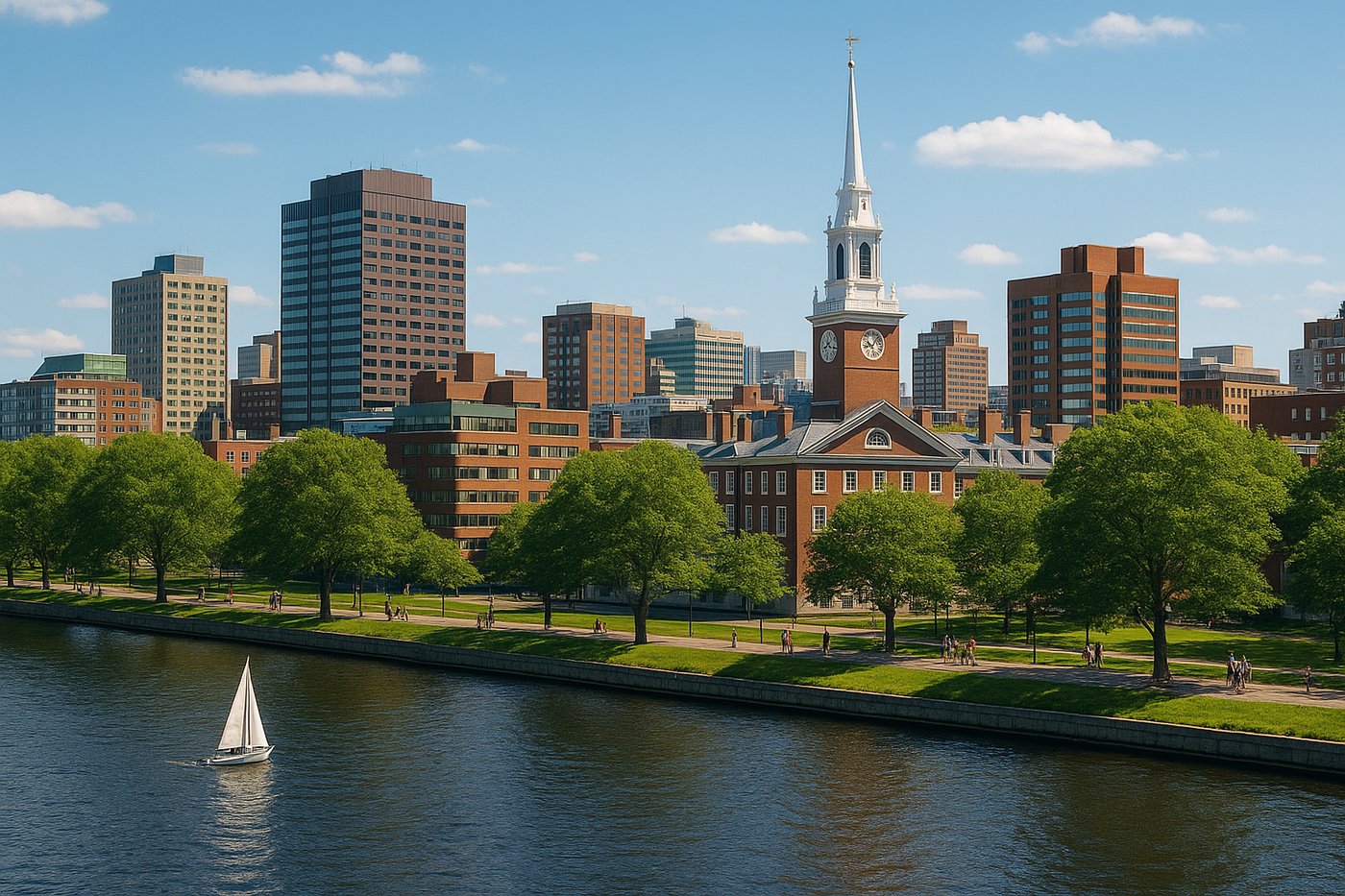
He built his staffing team in Basel and used it remotely to scout the market for talent for an institute that didn't exist yet, while simultaneously negotiating city and state tax incentives to reduce costs. On one return trip to Basel, he learned the President of Harvard and the Mayor of Boston had come to Basel to ask why the Company was choosing Cambridge over Boston. Dr. Vasella, a Harvard graduate, declined to meet them — leaving Mr. Gonzalez to manage a conflict with real staffing implications, since Harvard was a major sourcing ground for the Company. He met with both dignitaries and sent them home without a change of plan — Boston lacked as strong a location, and the move to acquire the historic Necco Factory building in Cambridge would also block the expansion of Millennium, then the area's largest biotech company. Boston offered none of these advantages, and Cambridge was still just across the river from Harvard and the city's major medical centers.
This was the largest game-theory project Mr. Gonzalez has handled. He began by mapping every actor's agenda, then continually sought the Nash equilibrium at each step: turning the Board from a $400M to a $4.0 billion decision; convincing Dr. Vasella to bet on him rather than bring in an outside mega-project manager; managing internal turf battles with other HR executives; securing the support of the Head of Pharma, even though it meant losing the Research Group and significantly changing his own role; managing the President of Harvard and the Mayor of Boston; bringing Senator Ted Kennedy to the announcement of the $4.0 billion investment — the very same day the Catholic Church publicly acknowledged its role in the Boston child abuse scandal; securing a favorable ruling from Swiss and US tax authorities to retain Swiss tax treatment over compounds discovered in Basel; and relocating key scientists from Basel to Cambridge with relocation packages built to make the moves non-contentious and maximize each person's output.
El Sr. González se incorporó a Novartis en marzo de 2000 tras más de 9 años en PepsiCo. Después de un año en el Negocio de Salud del Consumidor, el Dr. Dan Vasella le pidió que se convirtiera en Director de Recursos Humanos para Investigación y Desarrollo — el epicentro, como dijo el Dr. Vasella, del éxito de Novartis. El Dr. Vasella incluso le pidió al Sr. González que redactara su propia oferta de compensación para el puesto, opción que decidió no tomar.
Situación
El Dr. Vasella había contratado a McKinsey para garantizar que Novartis mantuviera su primer lugar en descubrimiento y desarrollo de fármacos. Su recomendación: trasladar el grupo de I+D a EE.UU., ya sea a la Costa Oeste o al área de Boston. Esto se complicaba porque Novartis necesitaba preservar su estatus fiscal suizo — una ventaja de 10 puntos porcentuales sobre sus competidores estadounidenses.
Actores
- Dr. Dan Vasella
- Junta Directiva de Novartis A.G.
- Director de Investigación
- Director de Desarrollo
- Director de Farma
- Director de RRHH, Novartis
- Director de RRHH, Farma
- Cada jefe de departamento de I+D que tendría que reubicarse
- Presidente de Harvard
- Alcalde de Boston
- Presidente del MIT
- Gerente de la Ciudad de Cambridge
- Senador Ted Kennedy
- Senador John Kerry
- Gobierno Suizo
- IRS de EE.UU.
Solución
El Sr. González había trasladado previamente Novartis Consumer Health de EE.UU. a Suiza, y había construido una relación con el abogado fiscal principal de Novartis en Nueva York — así que resolvió primero las cuestiones fiscales.
Como Director de RRHH para I+D, elaboró el plan de personal para contratar a los 1,400 científicos necesarios para dotar el nuevo Instituto Novartis de Investigación Biomédica. El plan inicial contemplaba solo 400 científicos, lo que habría hecho de Novartis un jugador "me too" en Boston — pero el trabajo de contratación requerido era el mismo para 400 que para 1,400, así que el único cambio real fue el tamaño de la inversión: de $400M a $4.0 mil millones.
Una vez definida la escala del proyecto, ningún ejecutivo de Novartis quería asumirlo. El Sr. González lo reconoció como un proyecto que definiría su carrera, sopesó la agenda de cada actor, y concluyó que era la persona indicada para el desafío. Fue con el Dr. Vasella y se ofreció voluntariamente — convirtiéndose en COO de Investigación y mudándose a Cambridge mientras su familia permanecía en Suiza, viajando de ida y vuelta a Basilea según fuera necesario.
Construyó su equipo de reclutamiento en Basilea y lo utilizó de forma remota para buscar talento para un instituto que aún no existía, mientras negociaba simultáneamente incentivos fiscales municipales y estatales para reducir costos. En uno de sus viajes de regreso a Basilea, se enteró de que el Presidente de Harvard y el Alcalde de Boston habían ido a Basilea a preguntar por qué la Compañía elegía Cambridge en lugar de Boston. El Dr. Vasella, graduado de Harvard, se negó a reunirse con ellos — dejando al Sr. González a cargo de gestionar un conflicto con implicaciones reales de personal, ya que Harvard era una fuente importante de talento para la Compañía. Se reunió con ambos dignatarios y los envió de vuelta sin cambiar el plan — Boston no tenía una ubicación tan buena, y la compra del histórico edificio de la fábrica Necco en Cambridge también bloquearía la expansión de Millennium, entonces la mayor empresa biotecnológica de la zona. Boston no ofrecía ninguna de estas ventajas, y Cambridge seguía estando justo al otro lado del río de Harvard y de los principales centros médicos de la ciudad.
Este ha sido el proyecto de teoría de juegos más grande que el Sr. González ha manejado. Comenzó mapeando la agenda de cada actor, y luego buscó constantemente el equilibrio de Nash en cada paso: convertir la decisión de la Junta de $400M a $4.0 mil millones; convencer al Dr. Vasella de apostar por él en lugar de traer a un gestor externo de mega-proyectos; gestionar las luchas internas con otros ejecutivos de RRHH; asegurar el apoyo del Director de Farma, a pesar de que significaba perder el Grupo de Investigación y cambiar significativamente su propio puesto; gestionar al Presidente de Harvard y al Alcalde de Boston; llevar al Senador Ted Kennedy al anuncio de la inversión de $4.0 mil millones — el mismo día en que la Iglesia Católica reconoció públicamente su rol en el escándalo de abuso infantil en Boston; asegurar un fallo favorable de las autoridades fiscales suizas y estadounidenses para conservar el tratamiento fiscal suizo sobre los compuestos descubiertos en Basilea; y reubicar a científicos clave de Basilea a Cambridge con paquetes de reubicación diseñados para hacer los traslados no conflictivos y maximizar el rendimiento de cada persona.