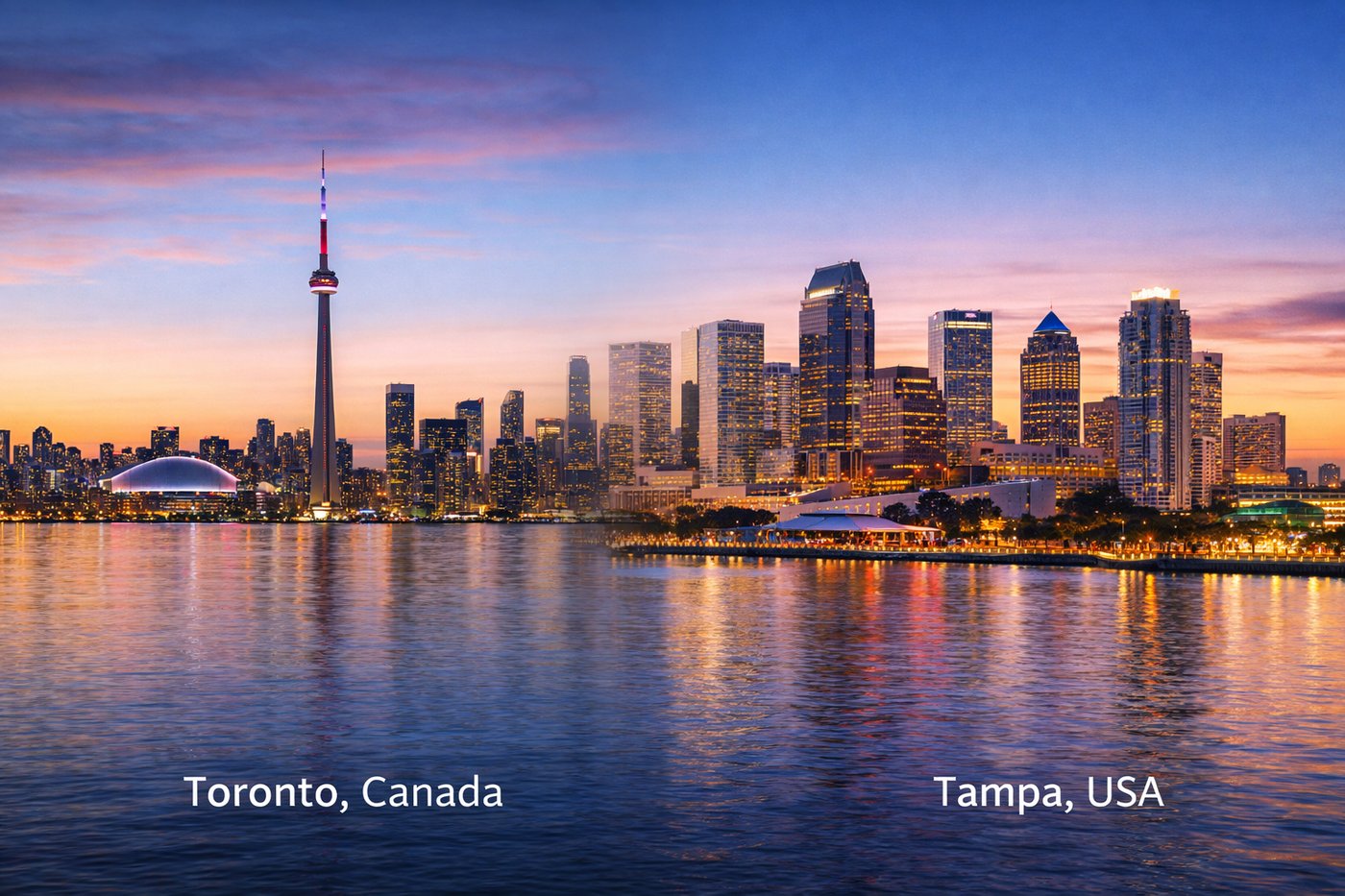
Location: Toronto, Canada · Tampa, Florida · USA
Type: Corporate Turnaround · Cost Restructuring · Change in Control
The Company
After a sabbatical from Microsoft, Mr. Gonzalez joined Cott Corporation, a Canadian company based in Toronto and listed on the Toronto Stock Exchange. Cott was the largest global manufacturer of private-label soft drinks and beverages for Walmart, Loblaw, Super Value (Target/Kroger), Costco, Tesco, Publix, and others. Founders Harry and later Gerry Pencer built the Company on a foundational relationship with Sam Walton, who recognized how private-label soft drinks helped transform Walmart from a discounter into a branded retailer that controlled its own product quality and price positioning. Sam's Choice and Sam's Cola played a defining role in that evolution — a legacy that helped fuel Walmart's private-label portfolio, which today accounts for over a quarter of its total grocery sales.
The Situation
A new leadership team, without full appreciation of this history and under heavy pricing pressure from Cott's largest accounts, invested in bottled water manufacturing — a significant category in Europe, Asia, and Canada (where Cott held rights to natural springs in the Rocky Mountains), but not in the US. A mega production facility was built in the Dallas Metroplex to meet demand that didn't materialize immediately.
Meanwhile, the new CEO, Brent Willis, challenged Mr. Gonzalez to relocate the HQ from Toronto to Tampa, Florida, while also building a case for private equity to acquire the Company — a move to Tampa having made the deal a domestic one rather than a cross-border transaction. Mr. Gonzalez designed a Change in Control plan to retain key players through the process, and the Company reached an agreement in principle with a large PE firm. But the Board, wanting more money, extended negotiations — and on September 17, 2008, the subprime mortgage crisis hit, triggering a liquidity crunch that froze every large transaction overnight. The deal died.
The Crisis
After the failed privatization, the Board terminated the CEO and appointed a board member as interim CEO while searching for a permanent replacement. During this period, the leadership team built by the prior CEO — alongside Mr. Gonzalez — worked out a restructuring plan to keep the Company from collapsing under its debt load:
- The new CFO, a former Walmart executive who had led global acquisitions, renegotiated debt covenants as the stock fell to $0.50 per share, risking delisting
- The new Head of Manufacturing, an experienced engineer from Tropicana, renegotiated pricing on key commodities — sugar, high fructose corn syrup, aluminum, and plastic pellets — to buy breathing room to operate
- A new executive hired to run the European business and Cott's own Royal Crown International (RCI) brand, backed by two sales executives recruited from Pepsi Cola International, gained significant ground by selling RCI concentrate into new markets
- These moves were only enough to keep the Company afloat, so Mr. Gonzalez recommended — and personally led — a significant people-restructuring plan, since his peers were too attached to their own teams to execute it themselves
The Outcome
The restructuring saved the Company over $600M, and the stock recovered from $0.50 to over $10 per share — the best-performing stock on the Toronto Stock Exchange that year. Later, a former Cott executive who had been terminated assembled an investor group and acquired a large block of common shares, triggering a genuine Change in Control event. The Board approved Mr. Gonzalez's CiC package, structured on similar terms to the plan he had built at PanamCo.
Ubicación: Toronto, Canadá · Tampa, Florida · EE.UU.
Tipo: Recuperación Corporativa · Reestructuración de Costos · Cambio de Control
La Empresa
Tras un año sábatico de Microsoft, el Sr. González se incorporó a Cott Corporation, una empresa canadiense con sede en Toronto y que cotizaba en la Bolsa de Valores de Toronto. Cott era el mayor fabricante mundial de bebidas de marca privada para Walmart, Loblaw, Super Value (Target/Kroger), Costco, Tesco, Publix, y otros. Los fundadores Harry y luego Gerry Pencer construyeron la Compañía sobre una relación fundacional con Sam Walton, quien reconoció cómo las bebidas de marca privada ayudaron a transformar a Walmart de un discounter a un minorista de marca que controlaba su propia calidad de producto y posicionamiento de precio. Sam's Choice y Sam's Cola jugaron un papel definitorio en esa evolución — un legado que ayudó a impulsar el portafolio de marca privada de Walmart, que hoy representa más de una cuarta parte de sus ventas totales de comestibles.
La Situación
Un nuevo equipo de liderazgo, sin apreciar del todo esta historia y bajo una fuerte presión de precios de las cuentas más grandes de Cott, invirtió en la manufactura de agua embotellada — una categoría significativa en Europa, Asia y Canadá (donde Cott tenía derechos sobre manantiales naturales en las Montañas Rocosas), pero no en EE.UU. Se construyó una megainstalación de producción en el área metropolitana de Dallas para satisfacer una demanda que no se materializó de inmediato.
Mientras tanto, el nuevo CEO, Brent Willis, desafió al Sr. González a reubicar la sede de Toronto a Tampa, Florida, mientras también construyía un caso para que una firma de capital privado adquiriera la Compañía — un traslado a Tampa que convertía el trato en uno doméstico en lugar de transfronterizo. El Sr. González diseñó un plan de Cambio de Control para retener a los jugadores clave durante el proceso, y la Compañía llegó a un acuerdo de principio con una gran firma de PE. Pero la Junta, queriendo más dinero, extendió las negociaciones — y el 17 de septiembre de 2008 estalló la crisis hipotecaria subprime, desencadenando una crisis de liquidez que congeló todas las grandes transacciones de la noche a la mañana. El trato murió.
La Crisis
Tras el fallido intento de privatización, la Junta destituyó al CEO y nombró a un miembro de la Junta como CEO interino mientras se buscaba un reemplazo permanente. Durante este período, el equipo de liderazgo construido por el CEO anterior — junto con el Sr. González — elaboró un plan de reestructuración para evitar que la Compañía colapsara bajo su carga de deuda:
- El nuevo CFO, un exejecutivo de Walmart que había liderado adquisiciones globales, renegoció los convenios de deuda mientras la acción caía a $0.50 por acción, arriesgando la exclusión de la bolsa
- El nuevo Director de Manufactura, un ingeniero experimentado de Tropicana, renegoció los precios de materias primas clave — azúcar, jarabe de maíz de alta fructosa, aluminio y pellets plásticos — para ganar espacio para operar
- Un nuevo ejecutivo contratado para dirigir el negocio europeo y la propia marca Royal Crown International (RCI) de Cott, respaldado por dos ejecutivos de ventas reclutados de Pepsi Cola International, ganó terreno significativo vendiendo concentrado de RCI en nuevos mercados
- Estas medidas solo alcanzaban para mantener a flote a la Compañía, así que el Sr. González recomendó — y lideró personalmente — un importante plan de reestructuración de personal, ya que sus pares estaban demasiado apegados a sus propios equipos para ejecutarlo ellos mismos
El Resultado
La reestructuración ahorró a la Compañía más de $600M, y la acción se recuperó de $0.50 a más de $10 por acción — la acción de mejor desempeño en la Bolsa de Valores de Toronto ese año. Más tarde, un exejecutivo de Cott que había sido despedido reunió a un grupo de inversionistas y adquirió un gran bloque de acciones comunes, desencadenando un verdadero evento de Cambio de Control. La Junta aprobó el paquete de CiC del Sr. González, estructurado con términos similares al plan que había construido en PanamCo.